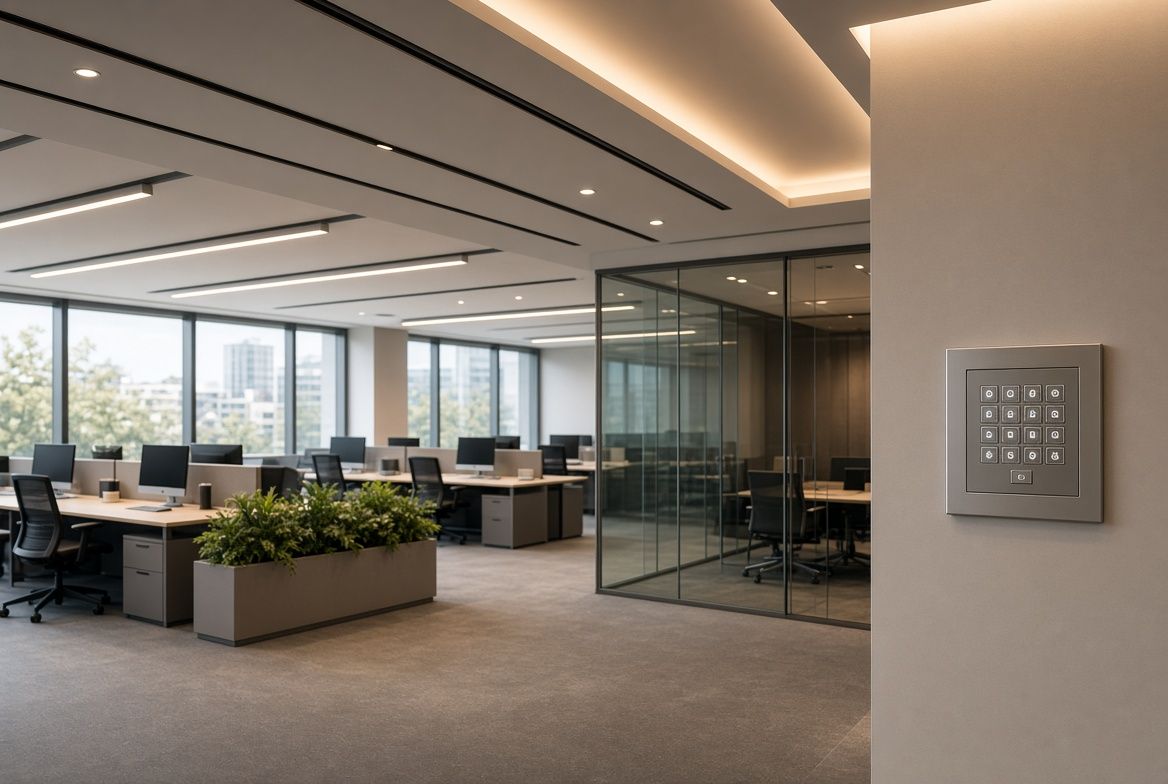


Flooring Maintenance for High-Footfall Commercial Spaces
Commercial flooring can experience thousands of individual movements over a relatively short period. Office entrances, reception areas, retail floors, corridors and communal spaces may be used continuously throughout the working day, bringing dirt, moisture and repeated wear onto the surface. Without an appropriate maintenance routine, flooring can begin to look tired long before the rest of an interior.
Maintenance should therefore be considered throughout the life of the floor, not only when visible damage appears. Contractors providing wood flooring installation services can help businesses understand the requirements of professionally installed timber flooring, while facilities teams should follow the specific care recommendations applicable to the floor and finish within their premises. A maintenance routine that works for one flooring system should not automatically be assumed suitable for another.
For facilities managers, the objective is to combine preventative measures, appropriate cleaning and timely intervention. This can help protect the appearance of the floor while identifying areas of unusual wear before relatively small problems become more difficult to address.
Start With the Flooring Manufacturer's Instructions
Before introducing a maintenance programme, establish exactly what type of flooring and finish is installed.
Different timber floors can have different cleaning and maintenance requirements. An oiled surface, for example, may not necessarily be maintained in exactly the same way as a lacquered one.
Keep the manufacturer's care information where cleaning and facilities teams can access it.
If the original documentation is unavailable, consider obtaining professional advice before applying unfamiliar products or treatments.
This is particularly important when taking over an existing commercial building. A new facilities manager may inherit a floor without knowing what products previous contractors used.
Avoid experimenting on the main floor area. An unsuitable treatment could affect the finish and create a much larger maintenance problem than the one it was intended to solve.
Stop Dirt at the Entrance
One of the most effective maintenance measures happens before people reach the main flooring.
Commercial entrances can bring grit, dirt and moisture into a building throughout the day. Once abrasive particles reach a timber floor, repeated foot traffic can move them across the surface.
An effective entrance-matting arrangement can help capture some of this material.
Mats themselves need regular cleaning. A heavily saturated or dirty entrance mat cannot perform effectively and may simply become another source of dirt.
During wet weather, entrances may require more frequent attention.
Facilities managers should also look at the transition between external paving and the interior. If a particular doorway consistently allows large amounts of water or debris inside, simply increasing floor cleaning may not address the underlying issue.
Establish a Consistent Daily Cleaning Routine
High-footfall floors generally benefit from frequent removal of loose dirt.
The exact method should follow the flooring manufacturer's recommendations, but the important principle is consistency.
Allowing grit and debris to remain on the floor gives foot traffic more opportunity to move it across the surface.
Cleaning frequency should reflect actual use rather than an arbitrary timetable.
A quiet office area may need less attention than the entrance to a busy shop. Similarly, bad weather or unusually busy trading periods may temporarily increase cleaning requirements.
Facilities managers should work with cleaning contractors to identify these differences.
The whole building does not necessarily need to be treated as though every square metre experiences the same level of use.
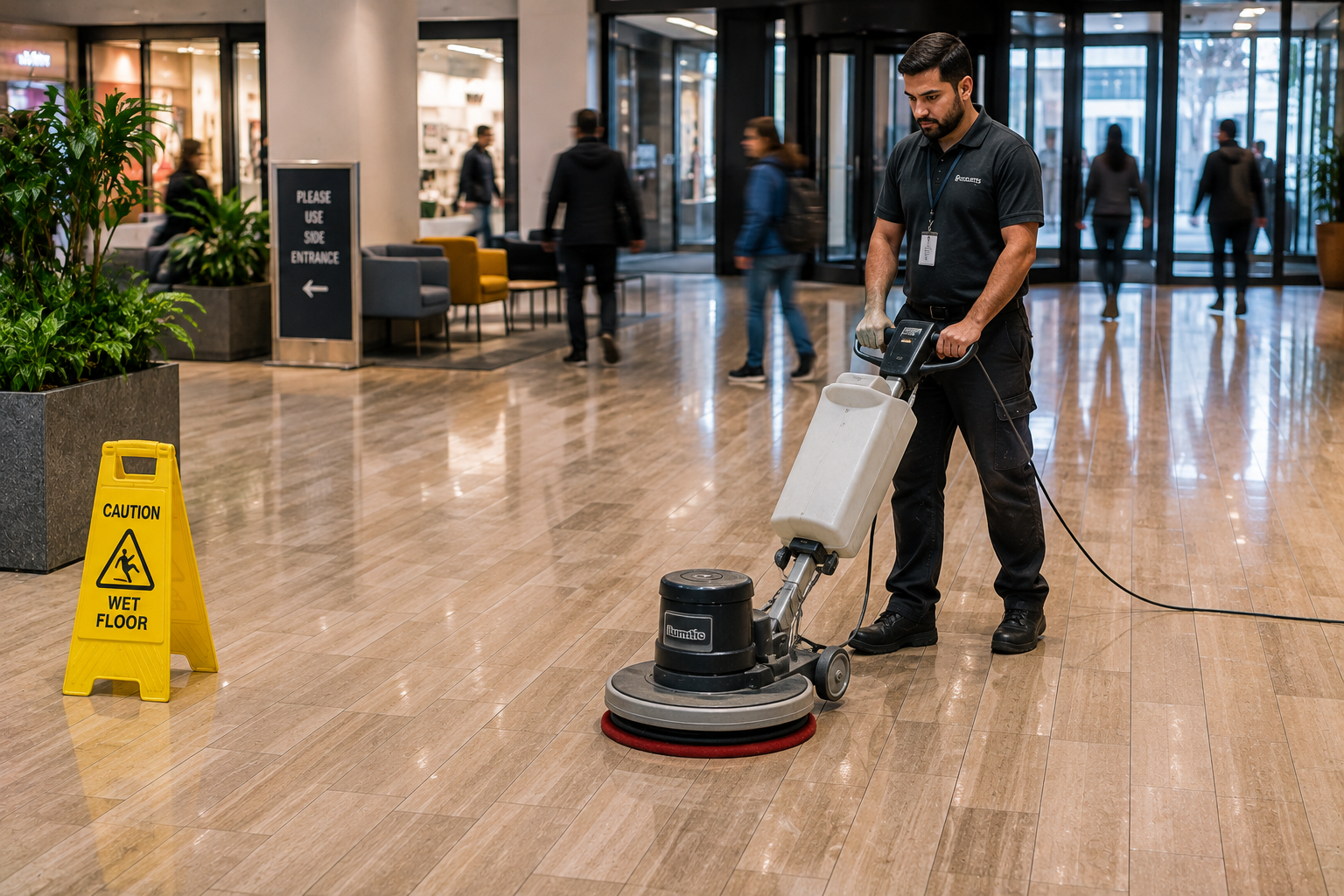
Deal With Spills Promptly
Spills are inevitable in many commercial environments.
Coffee, water and other liquids can be particularly common in offices, hospitality areas and customer-facing premises.
They should be dealt with promptly using a method appropriate for the flooring.
Apart from the potential effect on timber, a wet floor can create a slip hazard for employees and visitors.
Cleaning teams should understand how to respond and have suitable equipment readily available.
Avoid leaving excessive moisture on timber surfaces. Wood is a natural material, and inappropriate exposure to water can potentially cause problems.
If liquid has entered gaps, damaged areas or beneath flooring, professional assessment may be appropriate rather than simply drying the visible surface and assuming the issue has been resolved.
Use Suitable Cleaning Products
A product being marketed as a general floor cleaner does not mean it is suitable for every commercial floor.
Follow the care instructions for the specific timber and finish.
Avoid unnecessarily aggressive chemicals, abrasive cleaning methods or excessive water where these are not recommended.
Cleaning contractors should know which products have been approved for use on each flooring type within the premises.
This is particularly useful in mixed-use buildings.
A commercial property may contain timber, tiles, carpet and other surfaces, each requiring different maintenance. Using one universal cleaning method for convenience can produce poor results.
Clearly labelled equipment and documented procedures can reduce the risk of the wrong product being used.
Protect Floors From Furniture
Footfall is not the only source of wear.
Desks, chairs, display units and movable furniture can repeatedly affect relatively small areas of flooring.
Furniture protection should be appropriate for the particular floor and item.
Office chairs deserve particular attention because wheels can move across the same section of floor hundreds of times during a working week.
Retail environments have similar challenges when displays are moved or stock fixtures are repositioned.
Heavy furniture should not be dragged across timber.
When layouts change, lift and move items using appropriate methods rather than assuming the floor can withstand the movement because it is designed for commercial use.
Pay Attention to Concentrated Wear
Flooring rarely wears evenly.
Entrances, reception desks, corridors, checkout points and routes between commonly used spaces tend to experience more traffic.
Inspect these areas regularly.
Early changes in appearance do not necessarily mean the entire floor needs major work. Depending on the flooring and finish, a professional may be able to recommend appropriate maintenance before deterioration becomes more extensive.
Moving suitable furniture occasionally may also help where one very specific route is creating concentrated traffic.
However, operational practicality should come first.
A retail layout should not be changed purely for the sake of distributing footfall if doing so makes the premises less functional.
Coordinate Flooring With Building Maintenance
Commercial floors can be damaged during unrelated maintenance if contractors do not consider the finished surfaces around them.
Electrical maintenance is a good example. LEC provides commercial electrical installation and maintenance services for environments including offices, shops and other commercial premises. When electrical or other building-services work takes place within an occupied property, suitable protection should be considered before tools, access equipment or materials are moved across finished flooring.
Facilities managers should tell contractors about sensitive floor finishes before work begins.
Protective materials need to be suitable for the floor and should not themselves introduce moisture, adhesive residue or other problems.
Once maintenance is complete, remove protection carefully and inspect the area.
Coordination between facilities teams and contractors can prevent an otherwise successful maintenance job from leaving avoidable damage behind.
Protect Flooring During Refurbishment
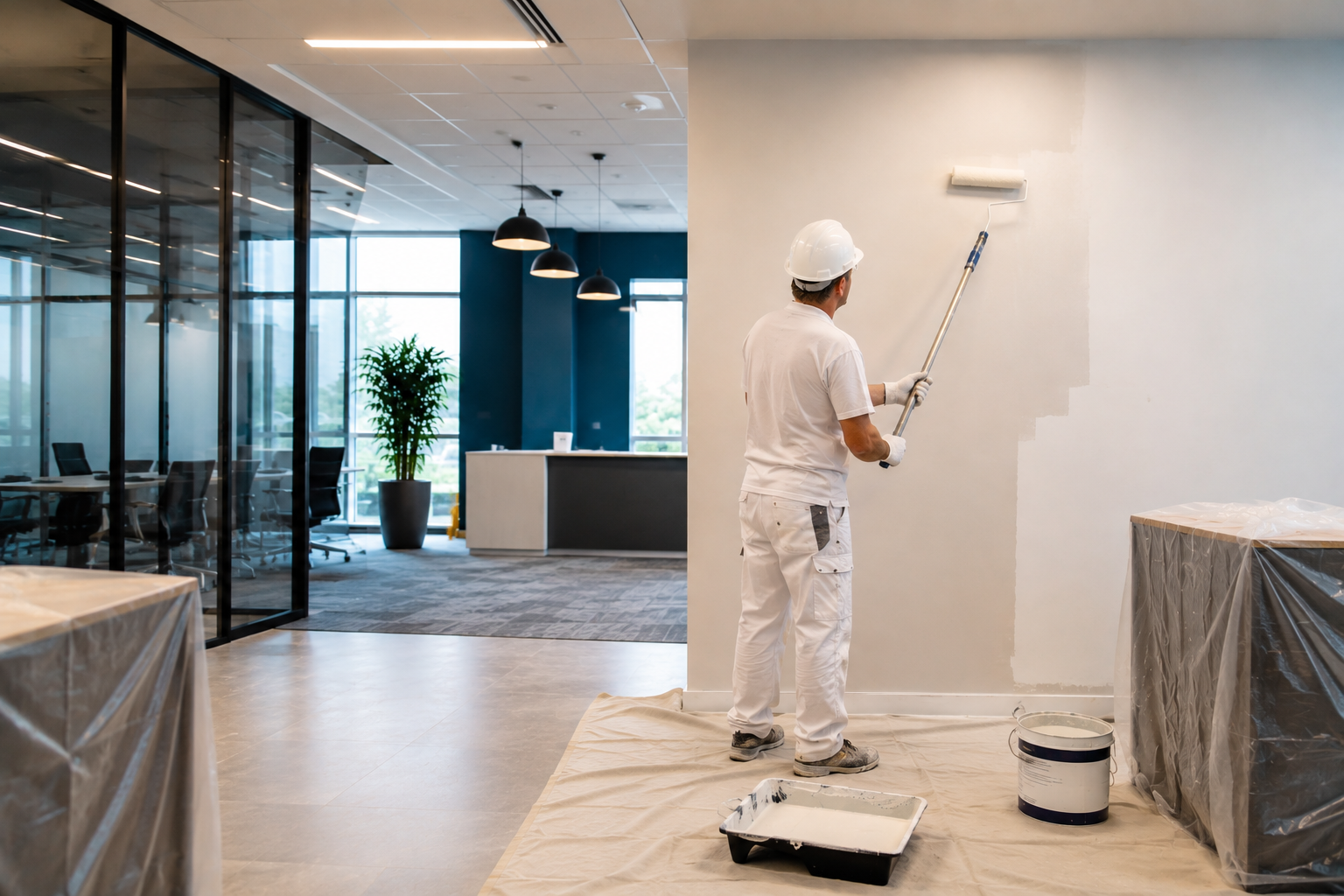
Refurbishment creates an even greater risk because several trades may be working within the same area.
Decorators, electricians, joiners and other contractors can introduce ladders, tools, dust and heavy equipment.
If existing timber flooring is being retained, include its protection within the project plan.
Do not wait until contractors arrive before deciding how it will be covered.
The protection method should suit the floor and the work being carried out. It should also be checked periodically rather than assumed to remain effective throughout a long project.
Debris trapped beneath protection can itself become abrasive.
Where work is particularly disruptive, facilities managers should consider whether sections of the premises need to be isolated rather than allowing unrestricted movement across finished floors.
Respond to Damage Early
Small flooring defects can be easy to postpone because they do not immediately stop the building from operating.
That can be a mistake.
Loose boards, significant scratches, damaged finishes or areas affected by moisture deserve assessment.
The appropriate repair depends on the flooring system and nature of the damage.
Avoid attempting cosmetic fixes with products that have not been confirmed as suitable. A quick repair using the wrong coating can leave a patch that is more noticeable than the original problem.
Where damage appears to have resulted from water ingress, investigate the source as well as the flooring.
Repairing the visible surface without addressing an ongoing leak is unlikely to provide a lasting solution.
Plan Periodic Professional Maintenance
Routine cleaning and professional floor maintenance are not necessarily the same thing.
Depending on the flooring and finish, periodic specialist treatment may be recommended.
Facilities managers should understand these requirements and include them within planned maintenance where appropriate.
Scheduling work before the floor is severely deteriorated can sometimes be more practical than waiting until extensive restoration is required.
Commercial operating hours also need consideration.
Some maintenance procedures may require an area to remain unused for a period, so businesses should plan around quieter periods, closures or phased access where possible.
Follow professional and manufacturer guidance on when the floor can return to normal use.
Keep Maintenance Records
Flooring records can be useful in larger commercial properties.
Record significant professional maintenance, repairs and any products or treatments applied to the floor.
If one area repeatedly develops problems, the history may help identify a pattern.
For example, recurring deterioration near an entrance might suggest that moisture or dirt control needs improvement rather than simply more frequent refinishing.
Records also help when cleaning contractors or facilities managers change.
The next team can see how the flooring has previously been maintained rather than starting from scratch.
Where possible, retain product specifications and manufacturer care instructions alongside these records.
Train Cleaning and Facilities Teams
A maintenance plan is only useful if the people carrying it out understand it.
Cleaning teams should know which products and equipment are appropriate, how spills should be handled and which issues need reporting.
Facilities staff should recognise when a problem is outside routine cleaning and requires professional flooring advice.
Simple reporting procedures can help.
If cleaners notice a loose board, unusual discolouration or recurring moisture, there should be a clear way to tell the facilities manager rather than assuming somebody else will notice.
Training does not need to be complicated. Consistent instructions can prevent many avoidable maintenance mistakes.
Protect the Floor Over the Long Term
Maintaining commercial flooring is largely about preventing avoidable wear and responding to problems at the right time.
Control dirt and moisture at entrances, remove loose debris regularly and use cleaning products appropriate for the specific flooring and finish. Pay additional attention to concentrated traffic areas, furniture movement and spills.
Facilities managers should also think beyond cleaning. Building maintenance, refurbishment projects and layout changes can all affect finished flooring if protection is overlooked.
Periodic professional assessment and clear maintenance records can support longer-term care, particularly in premises experiencing heavy daily use.
A commercial floor will inevitably show signs of use over time, but a structured maintenance programme can help it age more consistently while preserving the appearance and practicality expected from a busy office, shop or other commercial environment.