

Access Control & Security: Locks for Commercial Premises
Commercial premises need to balance security with practical everyday access. Employees, contractors, cleaners, delivery teams and visitors may all need to enter different parts of a building, while stock rooms, offices, plant areas and other sensitive spaces may need tighter restrictions. Relying on one type of lock or giving everyone the same level of access can make that increasingly difficult to manage as an organisation grows.
Businesses reviewing physical security can work with commercial locksmith and security specialists to assess locks, key management and other security requirements around the way a property is actually used.
Cambs Lock & Safe provides commercial locksmith services alongside master key and access-control solutions, making the relationship between traditional locks and wider entry management particularly relevant for business premises.
The right solution is rarely about finding the strongest-looking lock and fitting it to every door. Commercial security should consider the building, door construction, people requiring access, value of the areas being protected and how access needs to be managed over time.
Start With the Risks Around the Property
Before changing locks or installing electronic controls, assess the premises.
Identify the main entrances as well as secondary doors, staff access points, loading areas and other routes into the building.
Then consider what sits behind each door.
A customer-facing reception area will have different security requirements from a stock room containing valuable goods or a room containing sensitive business information.
Opening hours matter too.
Retail premises may have large numbers of people moving through public areas during the day but require much tighter control after closing. Offices can have cleaners, maintenance contractors and employees entering at different times.
Understanding these patterns makes it easier to decide where additional security is genuinely needed.
Choose Locks for the Door and Its Purpose
Commercial buildings can contain many different types of doors.
Timber, aluminium, composite and other door systems may each require different locking arrangements. Fire and emergency-exit doors can introduce further requirements.
Do not choose a lock solely because it appears physically substantial.
The lock needs to be compatible with the door, frame and intended use. The complete door assembly should be considered rather than one component in isolation.
Insurance requirements may also be relevant to particular premises, so businesses should check applicable policy conditions.
Where there is uncertainty, professional assessment is preferable to buying locks based only on product descriptions.
A high-quality lock fitted incorrectly or to an unsuitable door will not necessarily provide the expected level of protection.
Take Key Management Seriously
Mechanical keys remain practical for many commercial buildings, but problems can develop when their distribution is poorly controlled.
Facilities managers should know who has keys to important areas.
Avoid creating duplicates without any record of who receives them. When an employee leaves, keys should form part of the return process alongside passes, equipment and other company property.
Lost keys need an established response too.
The appropriate action depends on what the key operates and the security risk created by its loss.
A key to an internal stationery cupboard is clearly different from one that can open a primary entrance or several restricted rooms.
Maintaining a simple key register can make traditional locking systems much easier to manage.
Consider Whether a Master Key System Is Appropriate
Larger premises can become difficult to manage if employees need separate keys for numerous doors.
A properly designed master key system can allow different keys to operate defined groups of doors.
For example, an individual employee might access only their normal working area, while a facilities manager could require broader access across the building.
The hierarchy needs careful planning.
Giving too many people high-level keys can undermine the control the system was intended to create.
Think about both present and future requirements before implementation.
Departments may move, responsibilities can change and new areas may be added. A specialist can help determine whether a master key arrangement is appropriate and how the hierarchy should be structured.
Understand What Electronic Access Control Adds
Electronic access control changes the way entry permissions can be managed.
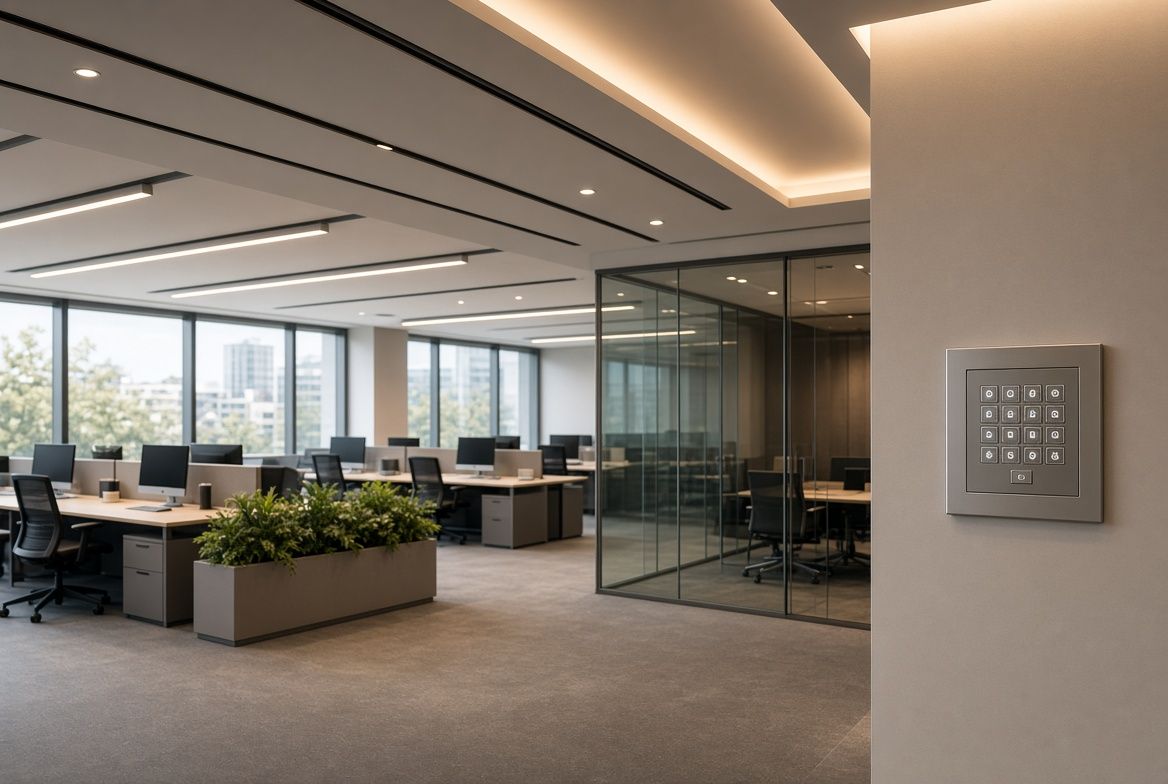
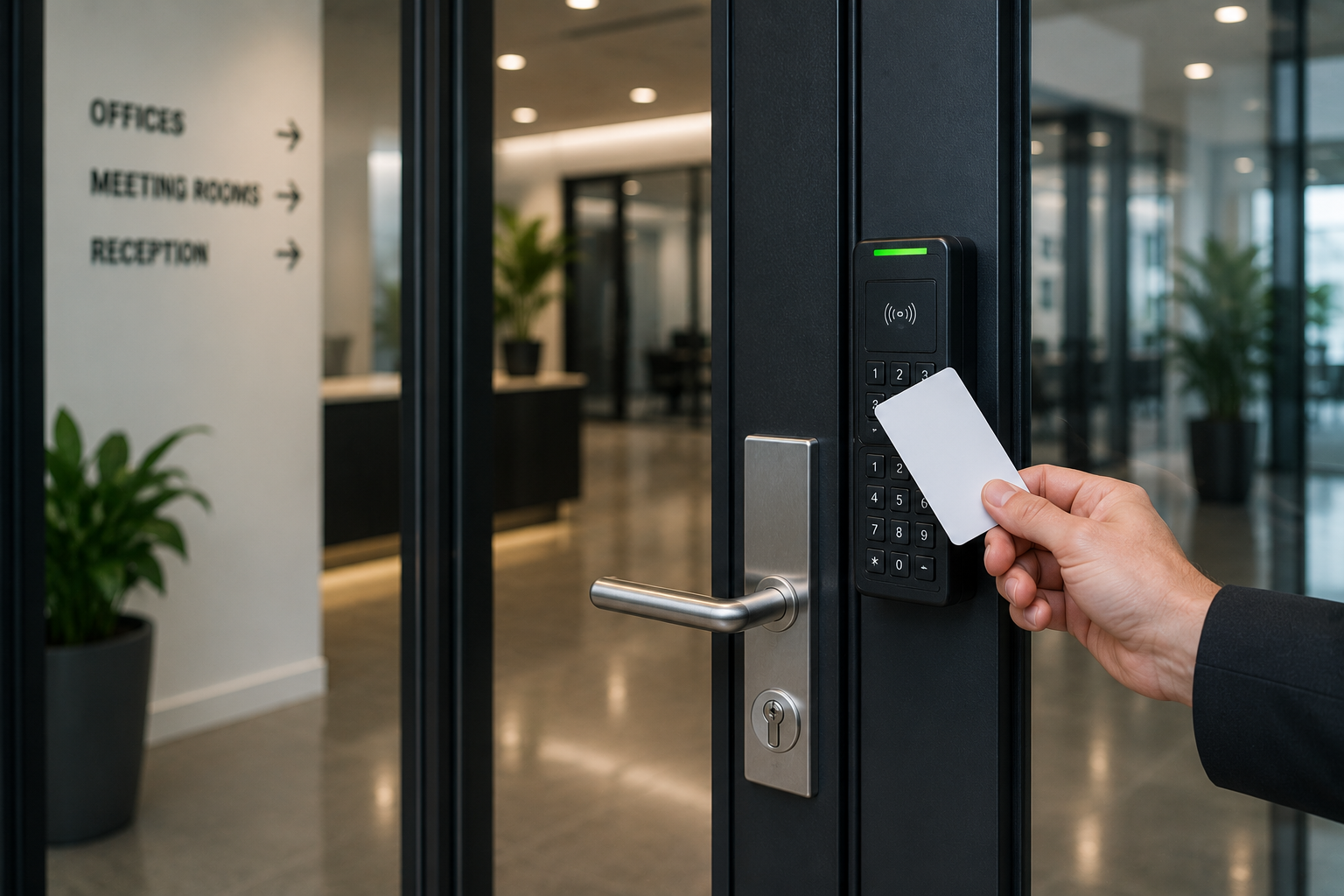
Instead of relying entirely on conventional keys, systems can use credentials such as cards, fobs, codes or other authorised methods depending on the equipment installed.
The major operational benefit is control.
If an employee leaves, an electronic credential may be capable of being withdrawn without necessarily replacing locks or recovering a physical key.
Permissions can also potentially be configured according to which areas a person is authorised to enter. However, access control should be designed around actual business requirements.
Installing electronic controls on every internal door may add unnecessary complexity where a simpler locking arrangement would be sufficient.
Define Access by Role
Not every employee needs access to every part of a commercial property.
Start by defining roles.
General office staff might require the main entrance and their normal working areas. Facilities personnel may need plant and service spaces. Senior employees could require access to other restricted rooms.
Contractors may only need temporary access to the areas where they are working.
This principle of providing access according to genuine requirements can make security easier to manage.
Avoid giving broad permissions simply because configuring individual access takes additional time.
Review permissions periodically as well.
An employee who changes department may retain access that is no longer necessary unless somebody updates the system.
Manage Starters, Leavers and Contractors
Security procedures should connect with HR and facilities processes.
When somebody joins the organisation, give them only the keys or electronic permissions appropriate to their role.
When they leave, remove those permissions promptly and recover physical security items where required.
Temporary contractors deserve similar attention.
A contractor attending for a short maintenance job should not automatically receive permanent unrestricted access.
Depending on the building, temporary credentials, escorted access or other arrangements may be more appropriate.
Keep records proportionate to the security needs of the premises.
The important point is that access should have a defined beginning and end rather than remaining active because nobody remembered to remove it.
Don't Forget Secondary Entrances
Security planning often concentrates heavily on the front door.
Commercial premises may have several other potential access points, including loading bays, rear doors, staff entrances and doors connecting different parts of a building.
Review them individually.
A rear entrance that is rarely monitored may require different controls from a reception entrance staffed throughout opening hours.
Doors used for deliveries can be particularly challenging because they need to remain practical while goods are moving through them.
Security should not encourage staff to prop doors open because the official access procedure is too inconvenient.
If employees routinely bypass a control, investigate why and determine whether the arrangement needs improving.
Coordinate Security With the Electrical Installation
Modern commercial security can depend on more than mechanical locks. Electronic door equipment, CCTV, alarms and other security technology may require appropriate electrical supplies, cabling or supporting infrastructure to operate reliably.
When security upgrades form part of a wider refurbishment, it is therefore worth coordinating them with the building's electrical requirements. LEC's commercial electrical services cover electrical installation and maintenance across offices, shops and other commercial environments.
Planning these elements together can help avoid situations where newly completed walls or finishes need to be disturbed later to accommodate additional cabling or electrical equipment.
The electrical contractor and security specialist should each remain responsible for work within their area of competence while communicating where systems interact. This is particularly important when several upgrades are being completed as part of the same commercial refurbishment.
Consider Emergency Exit Requirements
Security must never be considered without thinking about safe escape.
Businesses naturally want to prevent unauthorised people from entering restricted areas, but doors forming part of an emergency escape route have additional considerations.
Do not install or modify locking arrangements in a way that compromises required emergency egress.
The appropriate solution depends on the door, building, fire strategy and relevant requirements.
Where electronic access control interacts with emergency exits, competent professionals should be involved in the design and installation.
Facilities managers should also ensure that changes to security arrangements are communicated to the people responsible for fire safety.
Preventing unauthorised entry and enabling safe evacuation are both important objectives and need to be addressed together.
Maintain Locks Before They Fail
A commercial lock does not need to stop working completely before it deserves attention.
Difficulty turning a key, doors failing to close correctly or locking mechanisms becoming unreliable can indicate that investigation is needed.
Do not encourage employees to force a deteriorating lock until it eventually fails.
Report problems early.
The cause may involve the lock itself, alignment, the door or another component.
Regularly used entrances deserve particular attention because even a relatively small fault can affect large numbers of people.
Electronic access equipment also requires appropriate maintenance.
Follow manufacturer guidance and keep details of the contractor responsible for supporting the system.
Keep Security Records Useful
Security documentation does not need to become unnecessarily complicated, but important information should be controlled and accessible to authorised people.
Depending on the system, records might include key holders, access permissions, maintenance history and details of reported lost credentials.
Avoid keeping sensitive security information where anybody can access it.
At the same time, do not create a system that depends entirely on one employee's memory.
Facilities and security responsibilities can change.
Clear documentation makes handover easier and reduces the risk of old permissions or unreturned keys being forgotten.
Where access-control software is used, appropriate administrative access and account-management procedures should also be considered.
Review Security After Changes to the Business
Security requirements change as organisations evolve.
A company may take additional floors, increase staff numbers, alter opening hours or introduce new restricted areas.
Building refurbishments can also change entrances and internal layouts.
Review access arrangements after significant changes.
Ask whether the existing locks and permissions still reflect how the building is being used.
Security should also be reviewed after incidents such as lost high-level keys, attempted unauthorised access or significant staff changes where appropriate.
The objective is not to replace the system every time something changes.
It is to make sure an arrangement designed several years ago has not gradually become unsuitable for the current organisation.
Build Security Around How the Premises Operate
Effective commercial security requires more than adding stronger locks to doors.
Businesses should understand who needs access, which areas require greater protection and how those permissions will be managed as employees and contractors change.
Mechanical locks and master key systems can remain practical solutions for many situations, while electronic access control can provide additional flexibility where permissions need to be managed more dynamically.
Whichever approach is chosen, door hardware, electronic controls, emergency-exit requirements and maintenance should be considered together.
Regular reviews are equally important. As premises, staffing and working practices change, the security arrangement should continue to reflect the risks and operational needs of the business rather than simply remaining as it was when first installed.