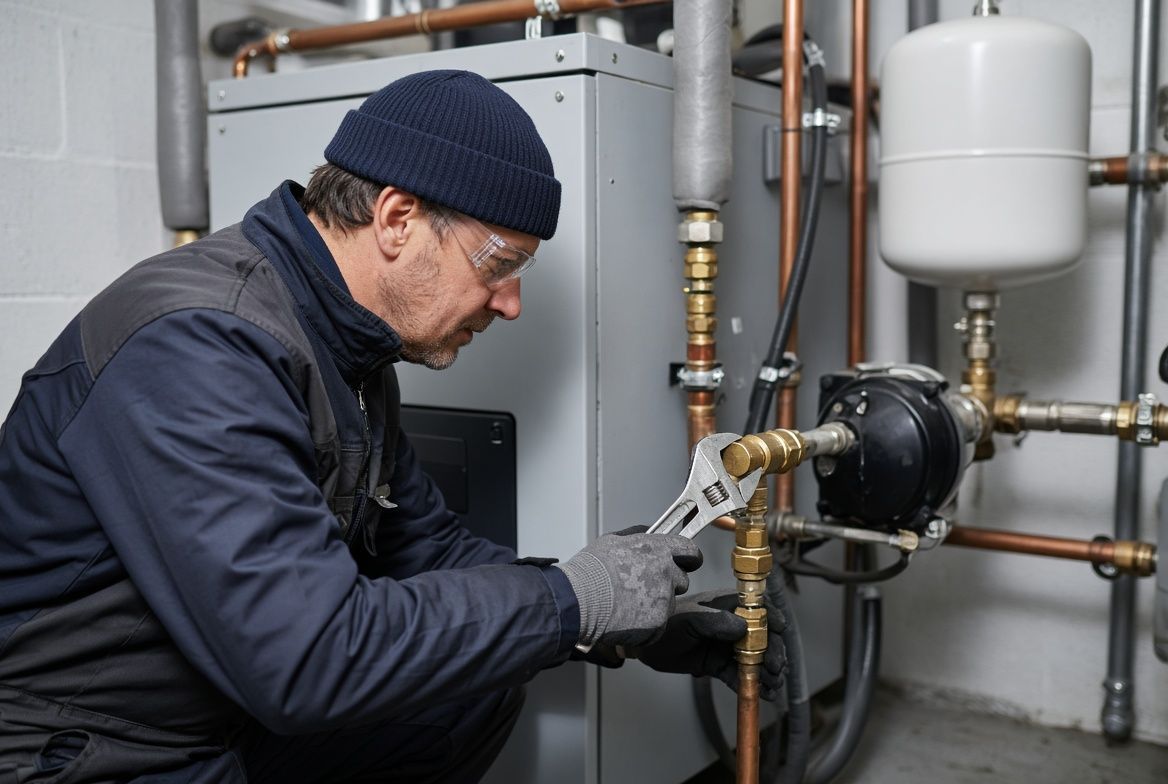


Commercial Boiler Servicing & Compliance for Landlords
Commercial boilers can be responsible for heating offices, shops, communal areas and other business premises for long periods throughout the year. When a system is working normally, it can easily become something that receives little attention. For commercial landlords and property managers, however, planned servicing should form part of the wider approach to maintaining safe, reliable building services.
Arranging appropriate commercial boiler servicing gives landlords an opportunity to have heating equipment inspected and maintained by suitably qualified professionals rather than waiting until a breakdown disrupts the property. The precise servicing requirements will depend on the appliance, system, manufacturer guidance and applicable legal responsibilities, so commercial properties should be managed according to their individual circumstances.
Boiler servicing is also only one part of compliance. Landlords need to understand who is responsible for the different building services within a property, maintain appropriate documentation and respond to identified defects. A well-organised maintenance programme makes those responsibilities easier to manage.
Understand Who Is Responsible for the Heating System
Responsibility should be established before maintenance becomes necessary.
Commercial leases can allocate certain repair and maintenance obligations between the landlord and tenant, and arrangements vary between properties. Facilities managed directly by the landlord may have a different structure from a building occupied under a full repairing and insuring lease.
Landlords and property managers should therefore understand the terms applying to the individual premises rather than assuming responsibility automatically sits with one party.
This becomes particularly important in multi-let buildings.
A landlord may be responsible for central plant serving communal or multiple areas while individual tenants have responsibility for other equipment within their demised premises.
Clear responsibilities reduce the risk of essential servicing being missed because each party assumed somebody else was arranging it.
Use Appropriately Qualified Engineers
Commercial boiler work is not a suitable task for a general maintenance operative unless that person holds the necessary competence and qualifications.
Where gas appliances are involved, work that falls within the scope of gas safety requirements must be carried out by an appropriately Gas Safe registered engineer who is competent for the relevant type of work and appliance.
Landlords should check contractor competence rather than assuming that somebody who works on domestic boilers is automatically appropriate for every commercial system.
Commercial heating installations can vary considerably in size, configuration and complexity.
Keep contractor details with the property's maintenance information so that the facilities team knows who to contact when servicing or repairs are required.
This also makes emergency response easier if a problem develops outside the normal servicing schedule.
Follow the Appropriate Servicing Requirements
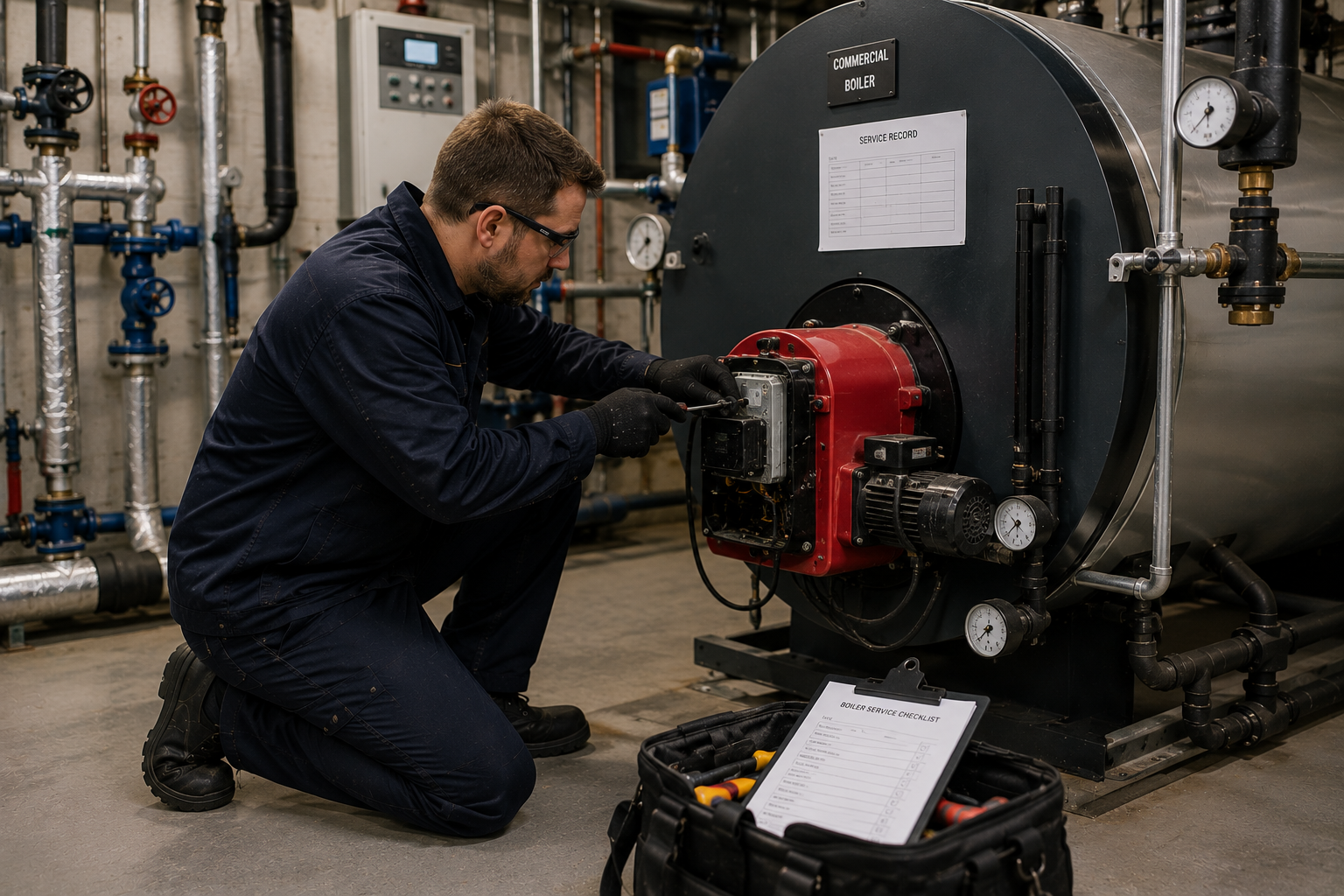
There is no useful one-size-fits-all servicing checklist for every commercial boiler.
The manufacturer's instructions should be considered alongside applicable legal requirements and professional advice when determining the maintenance schedule and work required.
A competent engineer can inspect relevant components, assess operation and identify issues requiring attention.
Facilities managers should avoid treating servicing as a simple certificate-gathering exercise.
The objective is to maintain the equipment appropriately and identify problems that could affect its safe or reliable operation.
Where an engineer recommends repairs or further investigation, those recommendations should be reviewed and acted upon appropriately rather than simply filed with the service paperwork.
Include Boilers in Planned Preventative Maintenance
Planned maintenance makes commercial heating easier to manage.
Instead of remembering boiler servicing as an isolated annual task, include heating assets within the property's broader maintenance schedule.
Record what equipment is installed, where it is located and when relevant servicing or inspections are due.
This is particularly useful for landlords managing several properties.
A central maintenance system can provide visibility across the portfolio and reduce reliance on individual employees remembering dates.
Planning ahead also gives landlords more flexibility when arranging access with tenants.
Where possible, servicing can be scheduled for a time that causes less disruption rather than becoming an urgent appointment immediately before a deadline.
Keep Accurate Maintenance Records
Good documentation is an important part of commercial property management.
Maintain records of servicing, significant repairs, replaced components and recommendations made by engineers.
Equipment details such as manufacturer, model and location can also be useful.
If a fault develops later, previous records may help the engineer understand whether the problem has occurred before or whether a component has already received attention.
Records are particularly valuable when property managers change.
A new facilities manager should be able to understand the maintenance history without searching through old email accounts or relying on the memory of previous employees.
Keep documentation organised and accessible to the people who genuinely need it.
Don't Ignore Warning Signs Between Services
Scheduled servicing does not mean a boiler can be ignored for the rest of the year.
Facilities teams should pay attention to changes in operation.
Unusual noises, leaks, repeated fault messages, unreliable heating or unexpected changes in performance can all justify investigation.
Building occupants can help identify problems early. Tenants may notice that certain areas are no longer heating properly or that hot water performance has changed.
Provide a clear process for reporting these issues.
Avoid repeatedly resetting equipment without understanding why it is shutting down. A recurring fault should be investigated by an appropriate professional.
Responding early may prevent a developing issue from becoming a more disruptive failure.
Coordinate Heating and Electrical Maintenance
Commercial boilers and heating systems can depend on electrical supplies, pumps, controls and associated equipment, so building services should not always be managed in isolation.
Where electrical work is required alongside heating maintenance, LEC's electrical installation services can support the wider management of electrical installations within commercial premises.
The relevant contractors should communicate where their work overlaps. A heating engineer should not be expected to undertake specialist electrical work outside their competence, just as an electrician should not interfere with gas equipment unless appropriately qualified to do so.
Plant rooms can contain several interconnected services, making clear responsibilities especially important.
Coordinated maintenance can also help landlords avoid situations where one system is altered without considering its effect on another.
Keep Plant Rooms Accessible
A surprisingly simple maintenance problem is poor access to equipment.
Plant rooms and service areas should not gradually become general storage spaces filled with boxes, furniture or unused materials.
Engineers need appropriate access to inspect and work on equipment.
Blocked access can make routine servicing more difficult and potentially delay urgent repairs.
Facilities managers should periodically check that relevant areas remain accessible and that keys or access-control arrangements are understood.
Lighting within service areas also needs to remain suitable for their intended use.
Where tenants control access to equipment, servicing appointments should be communicated with sufficient notice and the necessary arrangements confirmed beforehand.
Good access makes planned maintenance considerably easier to manage.
Plan Servicing Around Commercial Tenants
Heating maintenance can affect business operations.
Depending on the system and work required, heating or hot water may be temporarily unavailable during servicing or repairs.
Where tenants could be affected, communicate in advance.
Explain which services are expected to be unavailable and provide an appropriate indication of the planned maintenance window.
For buildings containing several businesses, central communication can prevent confusion.
Timing can also matter. Some work may be easier to complete outside peak occupancy, although the appropriate schedule will depend on the property, contractor availability and nature of the maintenance.
Good communication will not remove every inconvenience, but it can prevent routine work from becoming unnecessarily disruptive.
Review the Condition of Ageing Boilers
Servicing records can help landlords understand how a boiler is performing over time.
An older appliance is not automatically unsuitable simply because of its age, but increasing repair frequency, parts availability and overall condition can influence longer-term decisions.
If the same system requires repeated repairs, discuss its condition with a competent heating professional.
Consider the cost and practicality of continued repair alongside potential replacement, building requirements and future property plans.
Avoid making replacement decisions solely on a generic age threshold.
A system's condition, maintenance history, suitability and performance provide much more useful information.
Planning potential replacement in advance is generally easier than making a major capital decision during a winter breakdown.
Prepare for Unexpected Heating Failures
Planned servicing can support reliability, but no maintenance programme can guarantee that equipment will never fail.
Landlords should have a basic response plan.
Keep approved contractor details accessible and make sure relevant facilities staff understand who should be contacted.
Know how tenants will be informed if a breakdown affects heating or hot water.
Where a problem potentially involves gas or electrical safety, staff should understand that the priority is keeping people away from the hazard and contacting the appropriate professionals rather than attempting repairs themselves.
After a significant breakdown, record what happened and review whether any changes to the maintenance programme have been recommended.
Review Heating After Changes to the Property
Commercial premises can change significantly during their lifetime.
Internal layouts may be altered, occupancy can increase and spaces may be converted to different uses.
Major changes can affect what is required from the heating system.
Landlords undertaking refurbishment or fit-out work should therefore consider building services as part of the project rather than assuming the existing arrangement will remain suitable.
Heating and electrical contractors may need to coordinate where controls, supplies or plant are being altered.
Relevant documentation should then be updated so that future facilities managers understand the revised system.
Keeping maintenance information aligned with the actual building is essential for effective long-term management.
Treat Boiler Servicing as Part of Property Management
Commercial boiler servicing works best as part of a structured building-maintenance programme rather than an isolated appointment.
Landlords should understand their responsibilities, use appropriately qualified contractors, follow relevant servicing requirements and retain useful records of completed work and recommendations.
Facilities teams should also remain alert to problems between planned visits. Unusual operation, leaks or recurring faults deserve appropriate investigation rather than being left until the next scheduled service.
Heating systems also interact with other building services, particularly electrical supplies and controls, making coordination between competent contractors important.
By combining planned servicing, accurate records, clear responsibilities and sensible contingency planning, commercial landlords can manage heating systems more effectively while reducing the risk of preventable disruption for their tenants.