Commercial Plumbing Maintenance for Facilities Managers
Plumbing systems are easy to overlook when they are working properly. In a commercial property, however, even a relatively small problem can quickly affect employees, customers, tenants or day-to-day operations. A leaking pipe can damage finishes and equipment, a blocked toilet can put facilities out of use, and a hot water failure may disrupt essential building services. For facilities managers, planned plumbing maintenance is therefore an important part of keeping a property operational.
The challenge becomes greater when managing larger or multi-occupancy premises with numerous washrooms, kitchens, plant areas and water outlets. Working with experienced commercial plumbing & heating services in London can support a wider property maintenance strategy by helping identify faults, carry out repairs and maintain plumbing and heating systems before relatively minor issues develop into more disruptive problems. Anderson & Sons provides plumbing, heating and wider property maintenance services across London.
A good maintenance programme should not simply consist of responding whenever somebody reports a leak. Facilities managers can take a more systematic approach by understanding the building's plumbing assets, scheduling appropriate checks and maintaining clear records of recurring problems and completed work.
Build Plumbing Into Planned Preventative Maintenance
Reactive repairs will always be necessary occasionally, but they should not be the only plumbing strategy.
Plumbing can form part of a planned preventative maintenance programme alongside electrical systems, heating, fire safety equipment and other building services.
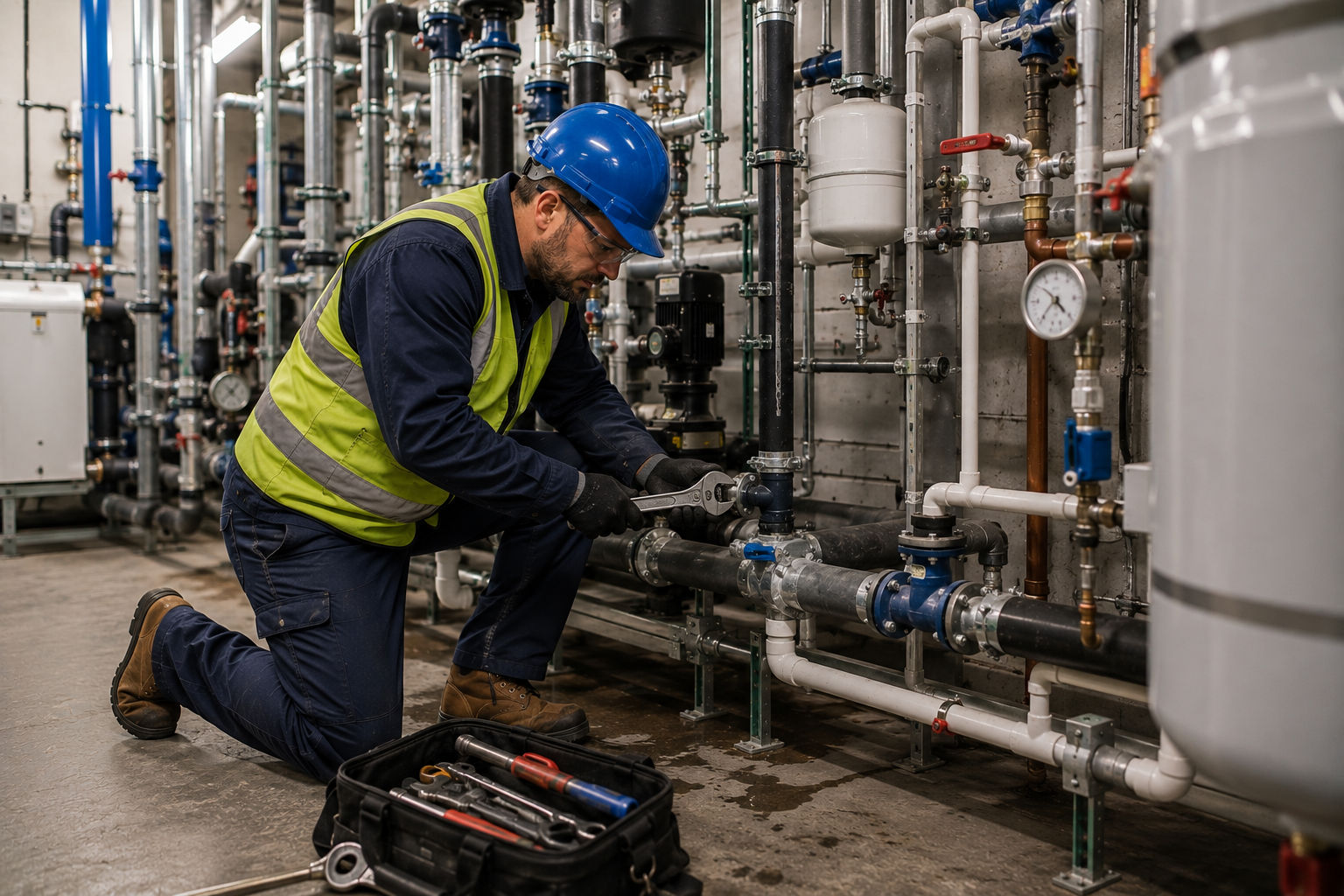
Start by identifying the main plumbing assets within the property. Depending on the building, these might include water supplies, valves, toilets, taps, sinks, showers, hot water cylinders, pumps and drainage systems.
The appropriate maintenance requirements will vary between assets. Manufacturer instructions, system design, usage levels and applicable regulatory requirements should all be considered when determining what needs attention and when.
High-use facilities may require more frequent checks than areas that are rarely occupied.
A structured schedule also makes budgeting easier because facilities teams have a clearer picture of routine maintenance rather than treating every plumbing cost as an unexpected expense.
Identify Small Leaks Before They Become Larger Problems
Not every water leak begins with an obvious burst pipe.
Dripping taps, leaking toilet cisterns, damaged seals and slow pipework leaks can continue for considerable periods before they attract attention.
Facilities teams should encourage occupants and cleaning staff to report signs such as unexplained water, staining, damp patches or continuously running fixtures.
Regular visual checks of accessible areas can also help.
Pay particular attention to locations where a leak could remain hidden or cause significant damage before becoming visible. Plant areas, cupboards containing plumbing, kitchens and little-used washrooms can easily be overlooked.
If water consumption increases unexpectedly without a clear operational explanation, further investigation may also be worthwhile.
Early intervention can help reduce water waste and limit damage to surrounding finishes or equipment.
Monitor Water Pressure and Performance
Changes in how a plumbing system performs can sometimes provide an early indication that something requires investigation.
Users might report that taps have suddenly developed low pressure, toilets are filling unusually slowly or water flow differs significantly between areas.
Do not automatically assume that every pressure issue has the same cause. Problems can arise from several parts of a system and should be properly investigated.
Facilities managers can help contractors by keeping records of when an issue began, which areas are affected and whether it is constant or intermittent.
This is particularly useful in larger commercial buildings where identifying a pattern can narrow down the area requiring attention.
Any investigation or adjustment to the system should be carried out by appropriately competent people.
Maintain Hot Water Systems
Reliable hot water can be essential in commercial premises, particularly where hygiene, catering, hospitality or welfare facilities depend on it.
Facilities managers should understand what type of hot water system serves the building and which areas depend upon it.
Maintenance should follow the manufacturer's requirements and any applicable safety or regulatory obligations.
Changes in water temperature, unusual noises, leaks or inconsistent performance should not simply be ignored until the system fails completely.
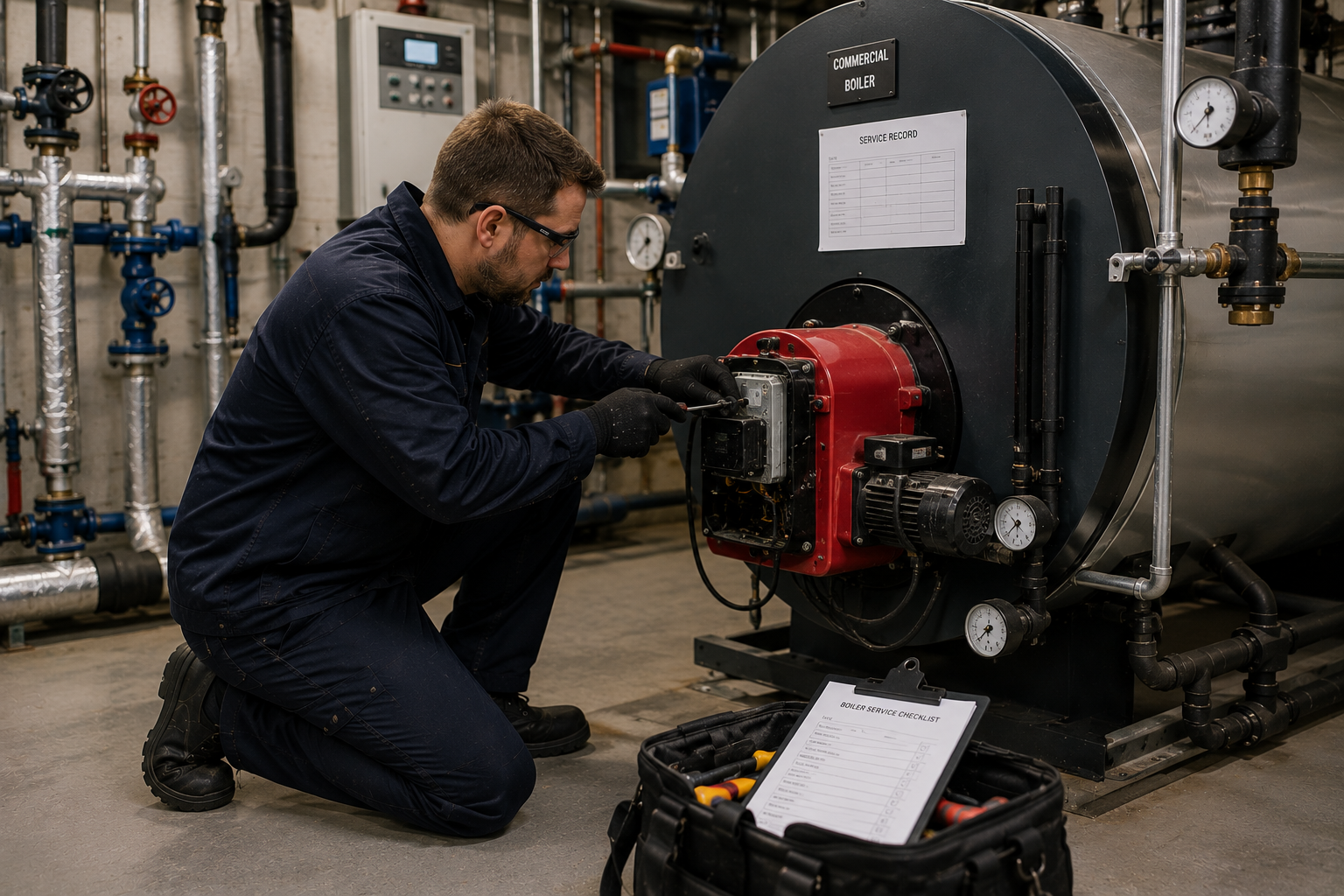
Where commercial boilers or other gas appliances are involved, work must be carried out by appropriately qualified engineers.
Planned servicing can also provide an opportunity to identify ageing components and discuss potential repairs before they result in an unplanned loss of service.
Pay Attention to Toilets and Washrooms
Washrooms are among the most heavily used plumbing areas in many commercial properties.
A single faulty toilet may be a relatively small problem in a large building, but several unavailable facilities can quickly become disruptive.
Regularly check for leaking cisterns, continuously running toilets, damaged taps and slow drainage.
Cleaning teams can be particularly useful in identifying developing problems because they visit these areas frequently.
Recurring blockages deserve further attention rather than repeated short-term fixes.
If the same toilet, basin or drainage point continually develops a problem, record the pattern and ask a competent contractor to investigate the underlying cause.
Facilities managers should also make sure isolation points and relevant plumbing assets are identifiable so that faults can be managed efficiently when they occur.
Don't Ignore Slow Drainage
A drain does not need to be completely blocked before it deserves attention.
Slow drainage, unusual smells or recurring problems can indicate that investigation is required.
Commercial kitchens, washrooms and other high-use areas can place considerable demands on drainage systems. The nature of the premises will influence both the risks and appropriate maintenance procedures.
Avoid relying repeatedly on unsuitable chemical products as a substitute for identifying the cause of a persistent drainage issue.
Facilities teams should also ensure building users understand what should and should not enter particular waste systems.
Where specialist drainage work is required, use an appropriate contractor with the equipment and expertise to investigate the problem safely.
Coordinate Plumbing and Electrical Maintenance
Commercial buildings contain interconnected services, which means maintenance work should not always be considered in isolation.
Water leaks can create risks around electrical equipment, while work in plant rooms or ceiling voids may involve plumbing and electrical services occupying the same space. Refurbishment projects can also require several building-services contractors to coordinate their work.
LEC provides commercial electrical installation and maintenance services across a wide range of commercial and industrial environments, including testing, inspection and ongoing electrical maintenance.
Facilities managers should make sure contractors understand relevant nearby services before work begins. Where plumbing work could affect electrical equipment—or vice versa—the appropriate specialists should coordinate rather than one trade making assumptions about another system.
Good communication is particularly important during leaks or other urgent incidents where several building services could potentially be affected.
Maintain Clear Plumbing Records
Maintenance records become increasingly valuable as a building ages.
Keep details of significant repairs, recurring faults, servicing and replaced components. Where appropriate, record which contractor completed the work and any recommendations made for future attention.
Plans showing pipework, isolation valves and major plumbing assets can also be useful where they are available.
Good records allow facilities managers to spot patterns.
If the same component has required several repairs within a relatively short period, replacement may deserve consideration. Similarly, repeated problems in one section of a building may indicate a wider issue requiring investigation.
Records are also valuable when responsibility for facilities management changes, because the next manager does not have to reconstruct the property's maintenance history from invoices and emails.
Plan Maintenance Around Building Users
Commercial maintenance has to consider the people using the property.
Shutting off water to repair a problem may affect washrooms, kitchens, tenants or business operations. Whenever work can be planned, consider the least disruptive time to carry it out.
Give occupants appropriate notice where services will be unavailable.
For multi-tenant buildings, clearly communicate which areas will be affected and for approximately how long.
Contractors also need appropriate access. Plant rooms, service cupboards and other maintenance areas should not become so heavily used for general storage that essential equipment cannot be reached.
Good scheduling will not eliminate every inconvenience, but it can prevent routine maintenance from becoming unnecessarily disruptive.
Prepare for Plumbing Emergencies
Even a well-maintained building can experience an unexpected leak or plumbing failure.
Facilities managers should therefore know what to do before an incident occurs.
Relevant team members should know how to contact approved contractors and where appropriate isolation points are located. Emergency information should be kept somewhere accessible rather than stored only on the computer of one employee.
The response plan should also consider other building services.
If water is entering an area containing electrical equipment, for example, the situation may require electrical expertise as well as plumbing intervention. Staff should not approach potentially hazardous equipment simply to investigate the source.
After an emergency has been controlled, record what happened and consider whether maintenance procedures need to change.
Review Ageing Plumbing Infrastructure
Planned maintenance should include longer-term thinking.
Commercial properties evolve. Occupancy changes, refurbishments take place and systems that were appropriate when the building was first fitted out may eventually require greater maintenance.
Use maintenance records to identify components producing an increasing number of faults.
A contractor may be able to advise whether continued repair remains appropriate or whether replacement should be considered as part of future capital expenditure.
This does not mean replacing functioning systems simply because they are older. Decisions should be based on condition, performance, maintenance history and professional assessment.
Planning potential upgrades in advance is generally easier than making major replacement decisions during an emergency.
Make Plumbing Maintenance Part of Facilities Management
Effective commercial plumbing maintenance is about understanding the building rather than waiting for something to fail.
Facilities managers should know the major assets under their responsibility, maintain appropriate inspection and servicing schedules, record recurring problems and respond promptly to signs such as leaks, slow drainage or changes in system performance.
Coordination with other building services matters too. Plumbing, heating and electrical systems frequently occupy the same spaces and can affect one another when problems occur.
A structured approach helps facilities teams move from repeatedly reacting to faults towards managing the condition of the property over the longer term. That can reduce avoidable disruption while helping keep essential facilities available for the people who rely on the building every day.